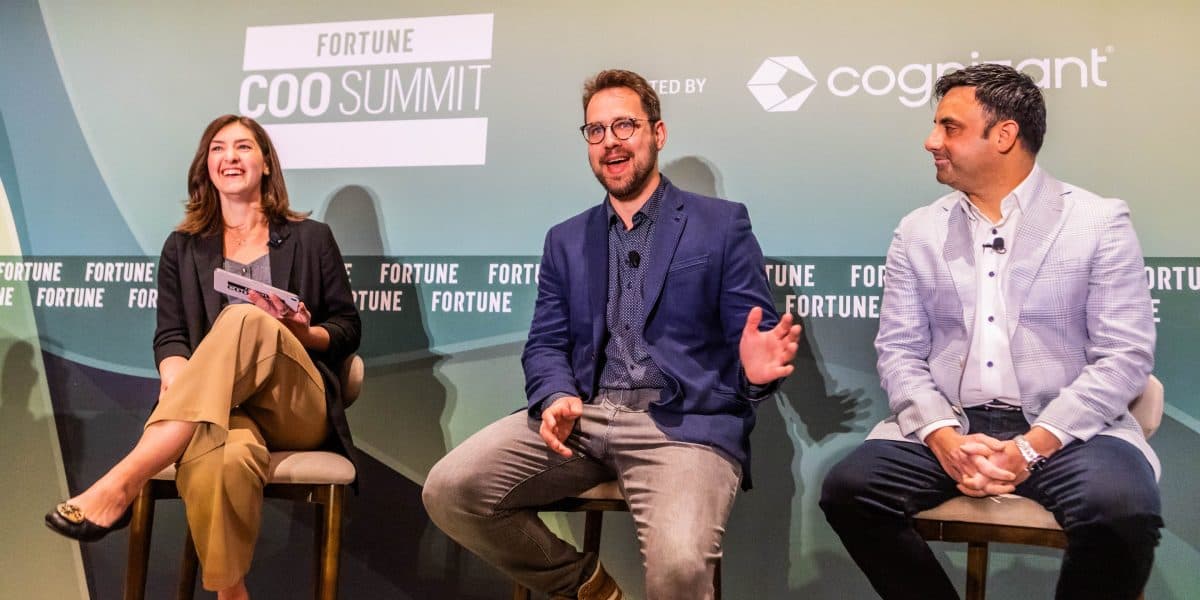
Photo via Fortune
As artificial intelligence becomes more integrated into business operations, many company leaders remain focused on the technology itself rather than the deeper organizational changes required. According to Eric Kelleher, President and COO of Okta, the real challenge lies not in deploying AI tools, but in fundamentally rethinking how work is structured and planned within organizations.
The shift represents a significant mindset change for management teams. Companies must move beyond traditional workforce planning to what Kelleher describes as 'work planning'—a framework that budgets for and coordinates both human workers and artificial digital workers. This hybrid approach requires organizations to reconsider job roles, responsibilities, and workflows in ways many leaders haven't yet begun to address.
For Dalton-area businesses, particularly those in manufacturing, logistics, and professional services, this transition has immediate implications. Organizations that fail to redesign their operations around AI capabilities risk inefficiency, while those that proactively restructure workflows stand to gain competitive advantages in productivity and cost management.
Industry experts suggest that companies addressing this challenge head-on will need to invest in change management, employee retraining, and strategic planning alongside their technology investments. The denial Kelleher references—treating AI as merely a tools upgrade rather than a catalyst for organizational transformation—may prove costly for businesses unprepared for the deeper structural shifts ahead.