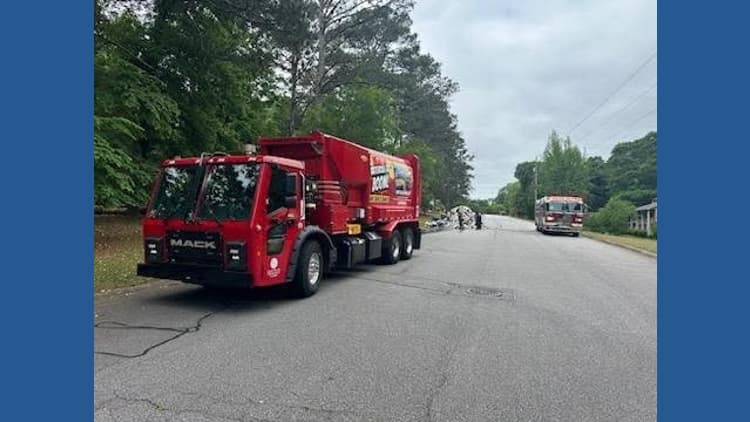
Photo via 11Alive Atlanta
A preventable fire in Athens has renewed focus on the dangers of improper battery disposal in municipal waste streams. According to 11Alive Atlanta, sanitation workers were forced to dump an entire truckload of garbage on a neighborhood street after batteries sparked a fire during collection and transport. The incident underscores a growing challenge for waste management operations across Georgia and the Southeast.
For Dalton-area logistics and waste management companies, the incident serves as a stark reminder of the operational and safety risks posed by commingled hazardous materials. Batteries—particularly lithium-ion units from consumer electronics—can generate extreme heat when compressed in collection vehicles or improperly stored, potentially endangering workers and surrounding communities. Proper training and clear disposal protocols are essential safeguards.
The emergency dumping of an entire garbage load created secondary environmental and public health concerns, demonstrating how a single compliance failure can cascade into broader problems. Waste management firms operating in Northwest Georgia should review their intake procedures, driver training, and customer education initiatives to prevent similar incidents.
As e-commerce and consumer electronics consumption grow, battery disposal has become a critical operational issue for regional logistics and waste handlers. Implementing robust screening procedures, partnering with certified battery recyclers, and educating the public on proper disposal methods can reduce fire risks while supporting sustainability goals.