Photo via Fast Company
Amazon has announced aggressive plans to scale its Prime Air drone delivery program, targeting 500 million package deliveries annually within the next decade. According to Fast Company, the company is currently operating pilot programs in eight U.S. cities with four additional markets planned for launch soon. For logistics professionals in Georgia's distribution sector, this represents a significant shift in how last-mile delivery may operate—particularly as regional warehousing becomes a critical node in nationwide drone networks.
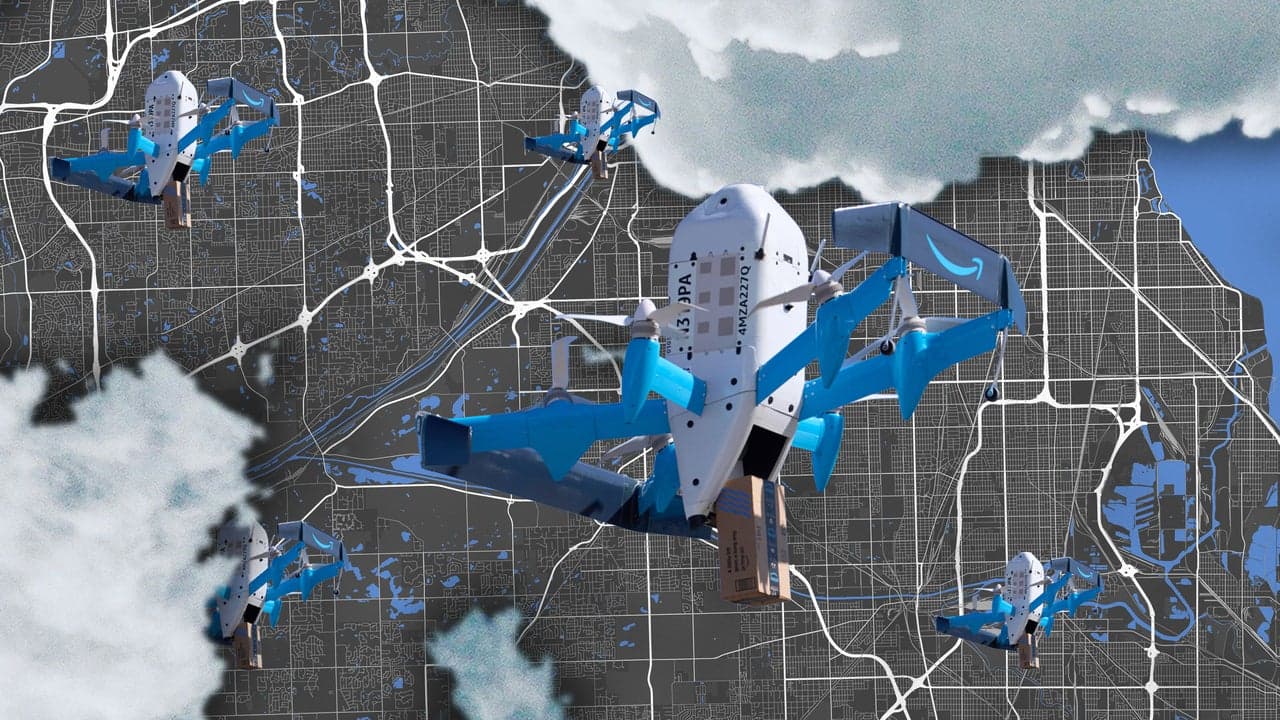
The upcoming Chicago trial, expected to launch in spring or summer, will test delivery drones within an eight-mile radius of Amazon's Matteson and Markham warehouses. These FAA-approved MK30 drones weigh 80-85 pounds, operate autonomously using onboard AI, and can deliver 5-pound payloads at speeds up to 73 mph at altitudes reaching 400 feet. For Georgia-based logistics companies evaluating their own automation strategies, understanding these technical specifications and operational parameters is essential to competitive positioning.
However, documented incidents raise concerns about safety and infrastructure readiness. Recent drone crashes—including an Amazon Prime Air collision with an apartment building in Texas and incidents involving power line strikes in Australia—highlight the risks of rapid deployment without mature air traffic management systems. Dalton's industrial sector should monitor how the FAA addresses these safety gaps, as regional warehousing hubs may face similar regulatory pressures and liability considerations.
The broader challenge extends beyond individual company operations to systemic coordination. Multiple vendors—including Wing, Flytrex, UPS, and air taxi operators—are simultaneously pursuing low-altitude airspace, creating potential congestion and operational complexity. For Georgia logistics stakeholders, the emergence of drone delivery underscores the need for industry-wide standards, communication protocols, and incident reporting mechanisms that don't yet exist at scale.