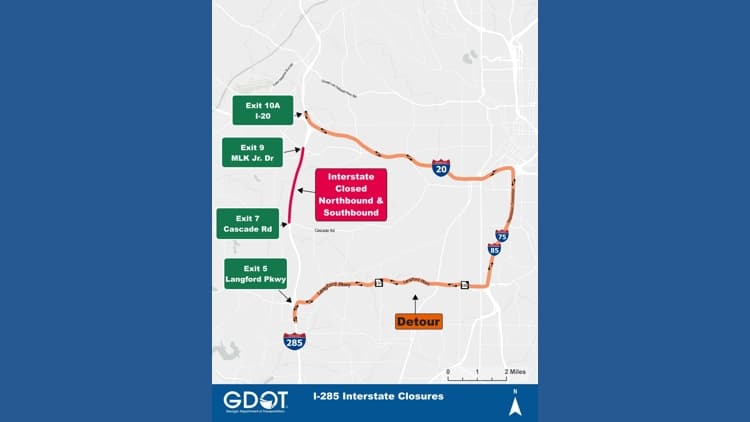
Photo via 11Alive Atlanta
The Georgia Department of Transportation (GDOT) is implementing infrastructure improvements along the I-20 westbound corridor in DeKalb County that could have ripple effects for Northwest Georgia logistics operations. Beginning Thursday, newly constructed ramps connecting I-20 WB to both I-285 and Wesley Chapel Road will alter traffic flow patterns in the metro Atlanta region, according to 11Alive Atlanta.
The project represents GDOT's ongoing effort to reduce congestion along this critical transportation corridor. For Dalton-area businesses reliant on the I-20/I-285 interchange—a major hub for regional freight and personnel movement—understanding these layout changes is essential for maintaining efficient supply chain operations and employee commute planning.
While the new ramps are designed to decrease overall traffic delays by providing alternative routing options, the modified exit configuration means drivers and logistics coordinators will need to adjust their navigation strategies. Companies operating between Dalton and the Atlanta metro area should brief their logistics and field teams on the transition to ensure minimal disruption to delivery schedules and commute times.
As Northwest Georgia's economy remains closely tied to Atlanta's distribution networks, staying informed about major transportation infrastructure changes helps local businesses anticipate and adapt to regional mobility shifts. Dalton-area logistics managers should monitor GDOT announcements for additional updates as the new interchange becomes operational.