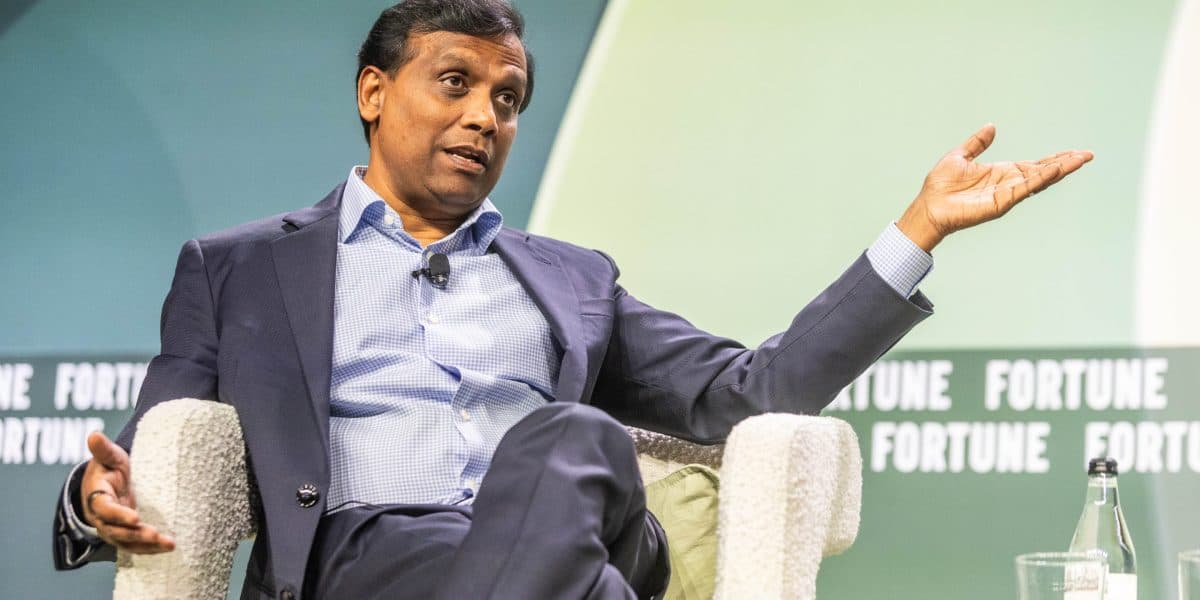
Photo via Fortune
While many technology companies are pulling back on hiring amid artificial intelligence advancement, Cognizant—a $27 billion IT services firm—is moving in the opposite direction. CEO Ravi Kumar S. plans to recruit more than 20,000 graduates this year, signaling confidence that AI will complement rather than replace entry-level workers. This hiring strategy offers an important counterpoint to widespread fears about automation eliminating junior positions across the business sector.
Kumar's perspective challenges the current Silicon Valley narrative around AI capability metrics. According to Fortune, he dismisses what he calls 'tokenmaxxing'—obsessive focus on token counts and model parameters—as a 'vanity metric' that doesn't correlate with practical business outcomes. For Dalton-area business leaders evaluating AI investments, this distinction matters: measuring raw computational power differs fundamentally from measuring productivity gains or revenue impact.
The Cognizant approach reflects a broader talent market reality. Workforce development remains critical even as AI tools proliferate, particularly for companies needing to scale operations while maintaining institutional knowledge. Kumar's hiring commitment suggests that the competitive advantage in coming years will belong to organizations that integrate AI tools while preserving human expertise and entry-level talent pipelines.
For Georgia businesses watching technology sector trends, Cognizant's strategy provides a case study in balancing innovation with employment stability. As automation reshapes industries from manufacturing to logistics to professional services, companies may benefit from examining whether AI investments genuinely reduce headcount or simply redirect workforce focus toward higher-value activities that require human judgment and development.