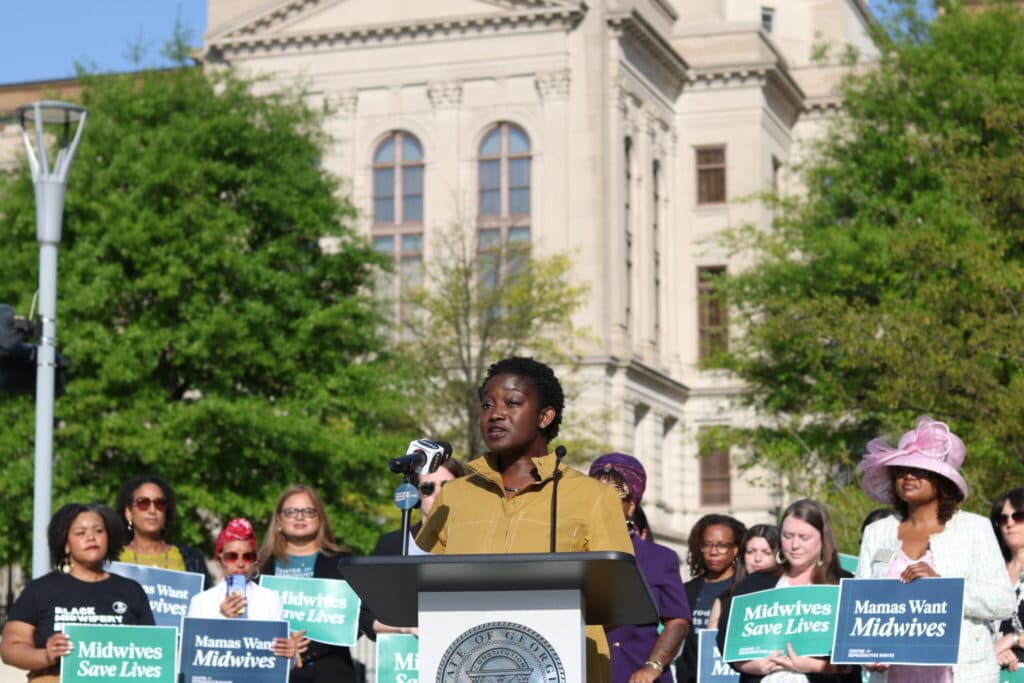
Photo via Georgia Recorder
Black midwives throughout the South are taking legal action against state regulations they argue create unnecessary barriers to maternal care delivery. According to the Georgia Recorder, these lawsuits highlight how restrictive licensing and practice requirements may be limiting access to healthcare services in a region already facing significant maternal health disparities.
The maternal health crisis in Southern states, including Georgia, has become increasingly urgent. The region experiences higher maternal mortality rates than national averages, with documented racial disparities in birthing outcomes and healthcare access. Midwives contend that their services could help address these gaps, particularly in underserved communities where access to traditional obstetric care remains limited.
The litigation raises important questions about healthcare regulation and public health outcomes. Proponents argue that midwifery-led care models have demonstrated success in improving maternal health metrics and reducing complications. State regulations requiring extensive physician oversight, hospital affiliations, or other compliance measures may inadvertently reduce the availability of qualified practitioners willing or able to serve patients.
For Dalton-area healthcare stakeholders and business leaders, this legal challenge signals broader conversations about healthcare delivery models and regulatory frameworks that could affect workforce development, facility planning, and maternal health services in Northwest Georgia. The outcomes may influence how states approach licensing standards and professional practice regulations across healthcare sectors.