Photo via Fast Company
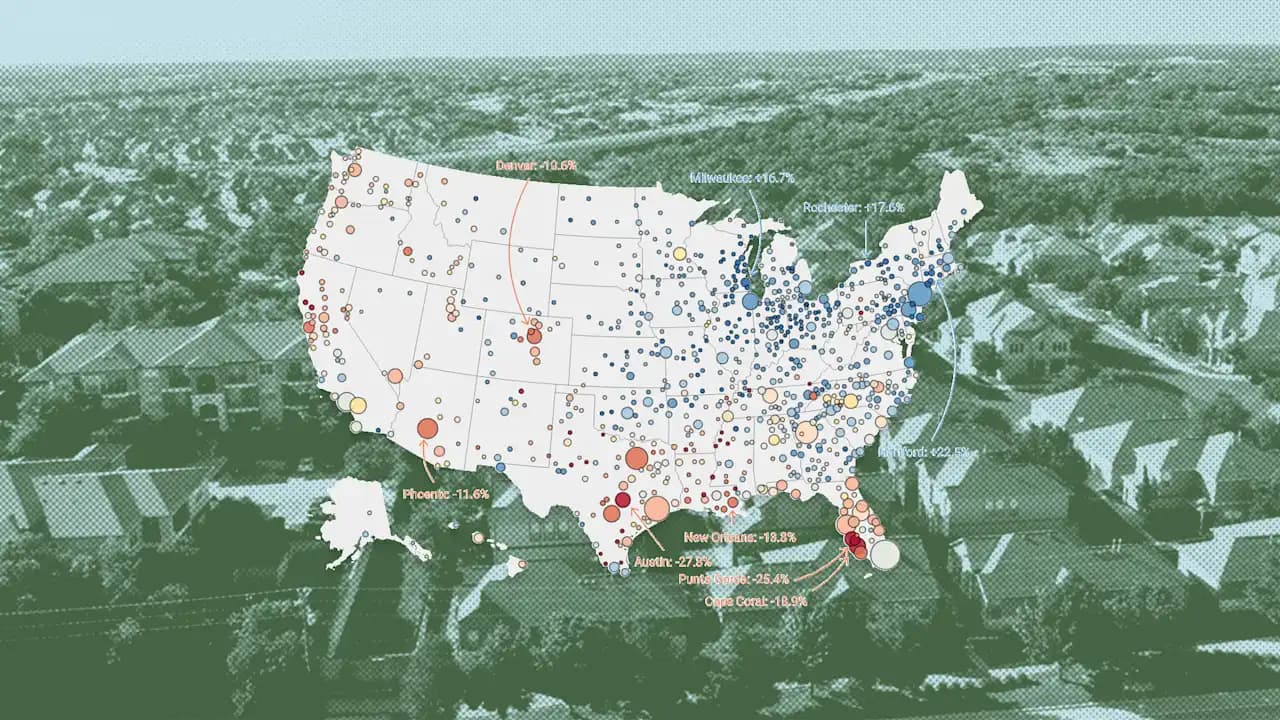
The housing market correction sweeping across the nation has hit certain regions particularly hard. According to analysis by ResiClub, 15 of the nation's 300 largest metro areas have experienced home price declines of at least 10% from their 2022 peaks. Austin, Texas leads the decline at 27.8%, followed by Punta Gorda, Florida at 25.4%, and Cape Coral-Fort Myers, Florida at 18.9%. This marks a dramatic reversal from the pandemic boom when these same markets saw price spikes of 70% or more between March 2020 and June 2022.
The root cause traces back to unsustainable valuation levels built during the pandemic. Low interest rates, remote work trends, and massive stimulus spending fueled demand that far outpaced housing supply—the Federal Reserve estimated new construction would have needed to increase by 300% to meet pandemic-era demand. When mortgage rates spiked in 2022 and migration patterns normalized, these overheated markets faced a reckoning. Markets that had grown too dependent on external migration rather than local income growth proved most vulnerable to correction.
The Sunbelt's abundance of new construction has amplified the cooling effect. Builders across the region, facing softer demand, have introduced pricing incentives and affordability adjustments to maintain sales velocity. These new construction discounts create spillover pressure on resale markets, as buyers shift toward new homes with better deals. Meanwhile, regions like the Northeast and Midwest, which experienced less pandemic-driven speculation and have tighter new supply pipelines, have proven more resilient with inventory remaining constrained.
For Dalton-area business leaders and investors watching regional markets, the data suggests a turning point. As frothy overvaluation recedes—particularly in Texas and Florida—downside risk is diminishing in formerly overheated markets. The correction, while painful for recent buyers, may be restoring more sustainable pricing fundamentals that better reflect local income levels and economic fundamentals, potentially creating new opportunity windows for prudent investment in select Sunbelt markets.