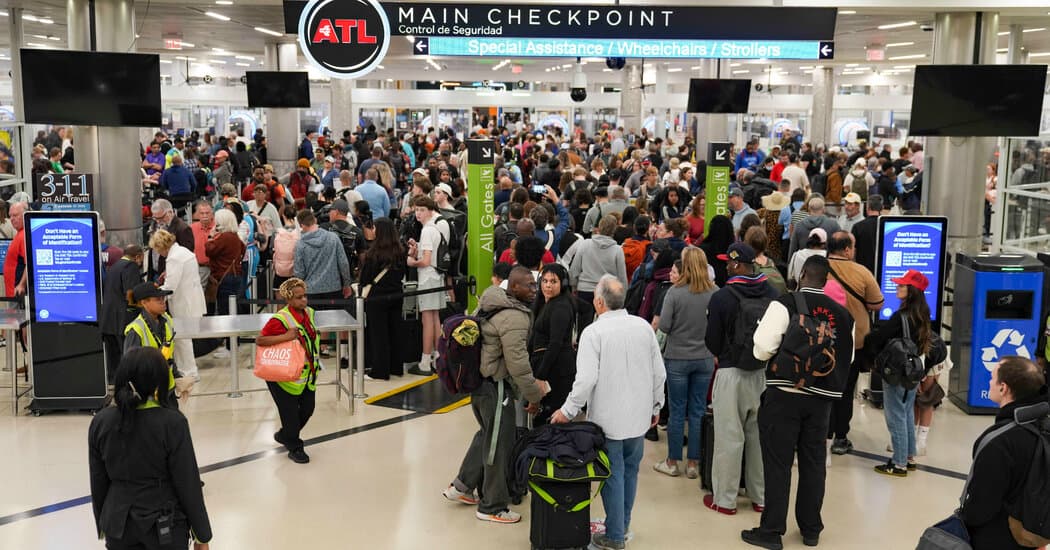
Photo via NYT Business
The Transportation Security Administration is accelerating its reliance on private security firms to staff airport checkpoints across the country, according to reporting from the New York Times. This strategic shift comes as federal officials seek to mitigate operational disruptions caused by government shutdowns and staffing challenges that have plagued airports in recent years.
For Dalton-area businesses with significant logistics and distribution operations, airport security modernization carries practical implications. Companies that depend on air cargo services, personnel travel, or time-sensitive shipments may experience changes in checkpoint procedures and processing times as the TSA transitions to hybrid security models at key regional hubs.
The private security expansion reflects broader government efforts to maintain continuity in essential services during budget uncertainties. By partnering with private contractors, the TSA aims to create more flexible staffing arrangements that can sustain operations regardless of federal employment disruptions—a concern that directly impacts the reliability of supply chain networks serving Northwest Georgia manufacturers and distributors.
Business leaders in Dalton's logistics and manufacturing sectors should monitor how this transition unfolds at major regional airports, particularly those serving the Atlanta area. Understanding changes to security protocols and processing times could inform decisions about shipping schedules, air freight costs, and business travel planning in the coming months.