Photo via Fast Company
The debate over workplace arrangements has become one of the most contentious issues facing business leaders today. While most companies have settled into hybrid models—combining in-office and remote work—cloud storage giant Dropbox has taken a different approach, doubling down on a fully virtual-first operation. The company's stance challenges the assumption that physical proximity is necessary for productivity, a belief the pandemic fundamentally tested for organizations across industries.
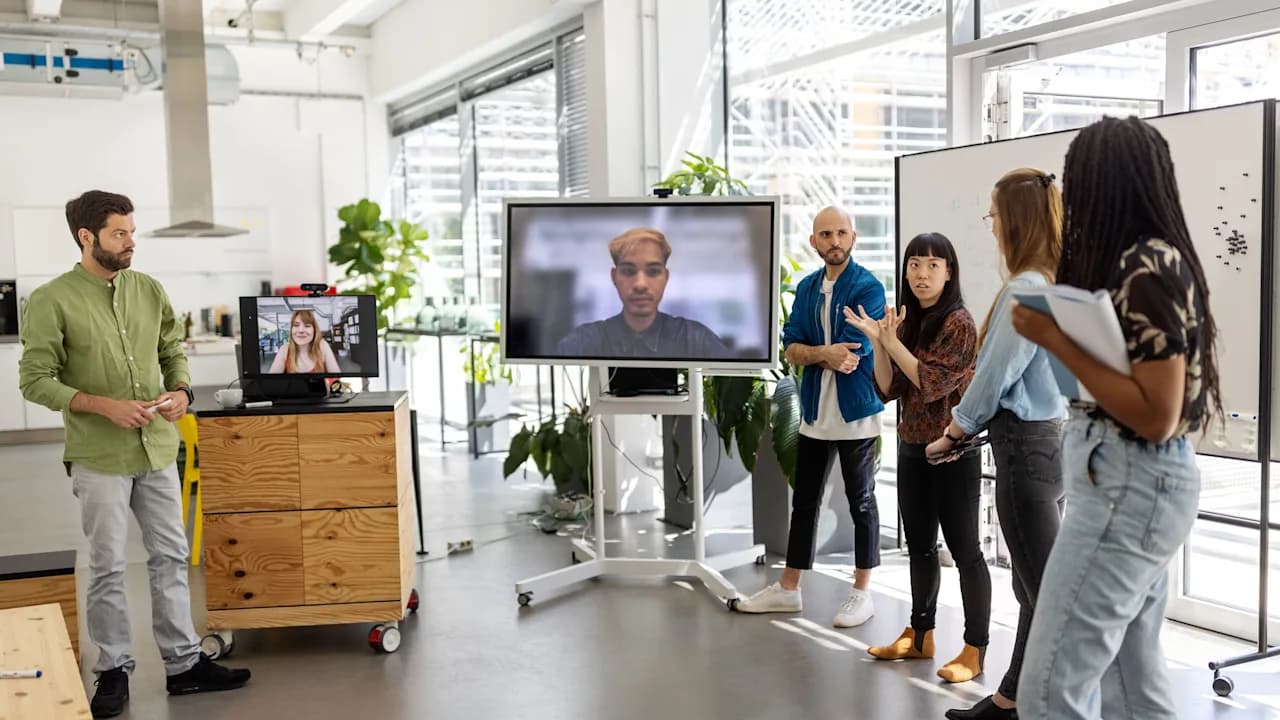
Dropbox structures its remote operations around intentional practices designed to maintain productivity and company culture without forcing employees into offices. The company uses 'core collaboration hours'—four-hour meeting blocks timed to accommodate multiple time zones—and emphasizes asynchronous decision-making through writing. According to Chief People Officer Melanie Rosenwasser, this approach eliminates unnecessary meetings and creates what the company calls 'an even playing field' where remote workers don't experience the disadvantage of joining video calls from home while colleagues sit together in conference rooms.
For Dalton-area business leaders considering their own workplace policies, the data offers perspective. According to Gallup analytics, 52% of U.S. companies operate hybrid models, while only 26% are fully remote and 22% remain completely on-site. Employee preferences vary: roughly 60% of workers with remote-capable jobs want hybrid arrangements, while one-third prefer full remote work. The challenge lies in balancing flexibility with the relationship-building benefits that in-person work provides.
Dropbox acknowledges that fully remote work presents distinct challenges, including burnout, boundary-setting difficulties, and sedentary behavior. The company has implemented solutions like 'Meet & Move'—encouraging employees to take walking meetings—and intentionally designed nonlinear workdays based on personal preferences. With 69% of Dropbox employees recommending the company to others, according to Glassdoor, the model appears to deliver both employee satisfaction and competitive recruiting advantages in an increasingly competitive talent market.