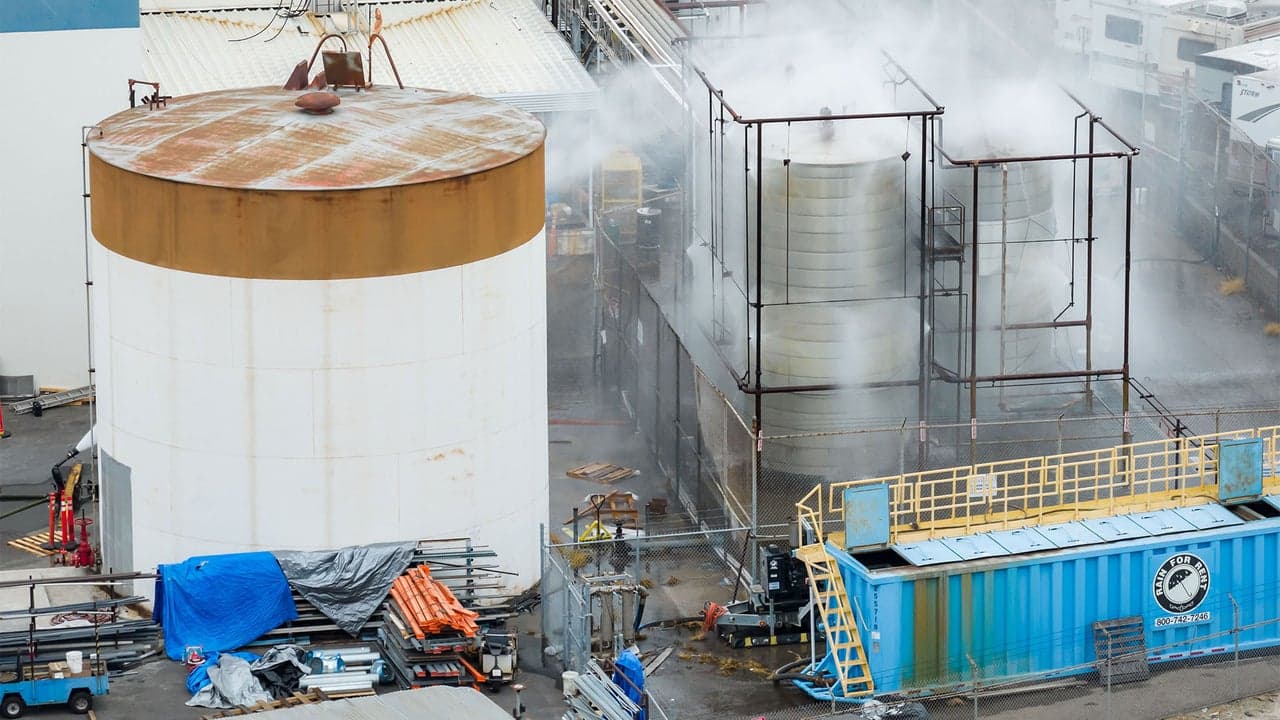
Photo via Fast Company
A damaged methyl methacrylate storage tank at a California aerospace parts manufacturer has forced the evacuation of 50,000 residents, highlighting the risks inherent in chemical manufacturing operations. The incident began when the tank overheated Thursday, prompting a multi-day emergency response involving federal and state authorities. For Georgia's robust aerospace and manufacturing industries—particularly those concentrated in Northwest Georgia—the situation underscores the importance of robust safety infrastructure and contingency planning.
The tank, operated by GKN Aerospace Transparency Systems, contained 6,000 to 7,000 gallons of methyl methacrylate, a volatile chemical used in aircraft component production. Officials deployed drone monitoring, water-cooling systems, and containment barriers to prevent catastrophic failure. The incident mirrors concerns raised after previous industrial emergencies, including the 2023 East Palestine train derailment, demonstrating that chemical handling protocols and environmental monitoring protocols warrant scrutiny across all manufacturing hubs.
The economic fallout extends beyond immediate safety concerns. Residents have filed class-action lawsuits against the facility operator, citing inevitable property value impacts. GKN Aerospace had previously settled regulatory violations in 2025 for $900,000, involving permitting and emissions issues—a reminder that compliance lapses can carry substantial financial and reputational costs for manufacturers nationwide.
For Dalton-area business leaders in manufacturing and logistics, this California emergency serves as a cautionary tale about the hidden costs of inadequate safety measures and regulatory oversight. Companies handling hazardous materials should review their own emergency response protocols and ensure regulatory compliance to avoid similar disruptions and legal exposure.