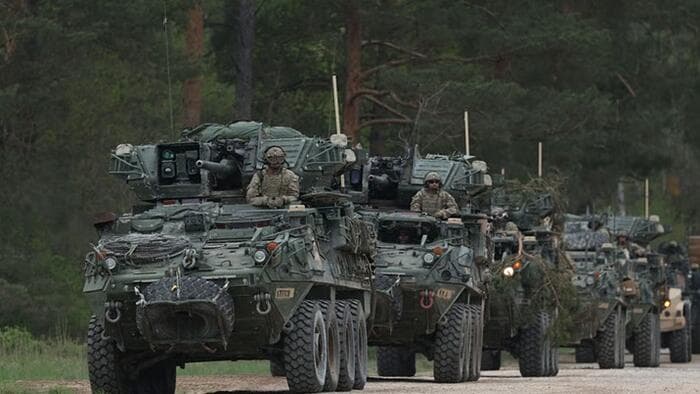
Photo via Zerohedge
The U.S. Army has abruptly canceled plans to deploy the 2nd Armored Brigade Combat Team, 1st Cavalry Division to Poland, reversing a decision that would have involved over 4,000 soldiers and substantial military equipment. According to NBC and Politico, Pentagon leadership was not informed in advance of the decision, with some troops learning of the cancellation through informal channels rather than official command announcements. The move represents a significant and unexpected shift in U.S. military positioning in Europe.
The sudden reversal has triggered concern among military and political leaders about broader implications for NATO deterrence strategy. According to reporting from CBS, officials characterized the decision as reflecting President Trump's dissatisfaction with European allies' contributions to U.S. military efforts. Lt. Gen. Ben Hodges, former commander of U.S. Army Europe, emphasized that the canceled deployment was intended to deter Russian aggression and protect American strategic interests, noting that Poland has consistently aligned with U.S. policy objectives.
Military deployment decisions of this magnitude typically have cascading economic effects across regions that supply equipment, logistics, and services to armed forces. While Dalton-area businesses in logistics, manufacturing, and defense-related sectors may not be directly affected by this specific Polish deployment, such reversals can signal broader uncertainty in defense spending priorities that warrant monitoring by local companies serving military and federal contractors.
The Pentagon indicated that planned reductions in U.S. military presence in Germany—affecting approximately 5,000 troops—will unfold over a longer timeframe, potentially six months to a year. The contrast between the rapid Poland pullback and the gradual Germany drawdown suggests shifting strategic priorities that merit attention from regional business leaders tracking federal spending trends and defense industry developments.